To deliver greater transparency, bolstered social license to operate, and sustainability assurance to domestic and international markets by delivering the essential traceability infrastructure required to fulfil CITES obligations. The solution will transform record keeping and compliance from a burden into a competitive advantage that validates sustainable stewardship and secures global market access.
CITES (Convention on International Trade in Endangered Species of Wild Fauna and Flora) is an international agreement between governments. Its aim is to ensure that international trade in specimens of wild animals and plants does not threaten the survival of the species.
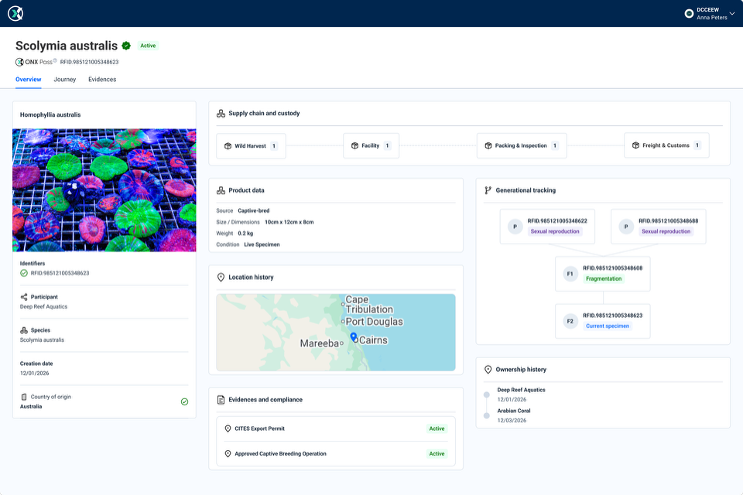
To deliver the world's-first coral traceability solution, using cutting-edge, secure technology to track and trace individual corals, supporting provenance recording and Australia's CITES obligations.
The Coral Traceability Solution will:
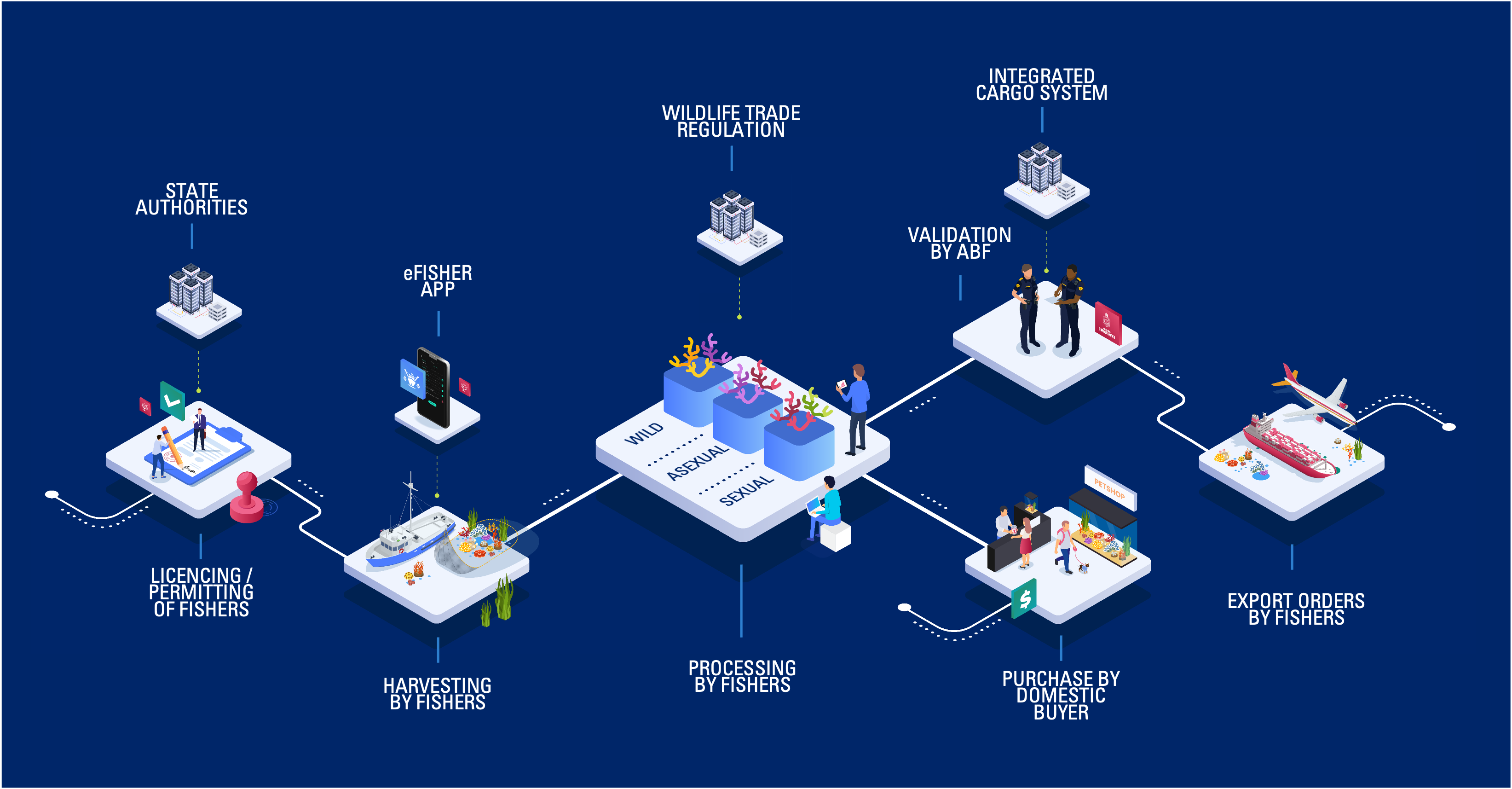
The Australian marine aquarium and coral fishery trade operates within a complex ecosystem of independent stakeholders. While the industry already meets world-leading standards for Sustainability and Legality, the supply chain currently lacks a common digital thread. The Coral Traceability Solution will connect these fragmented steps, creating the visibility essential for a truly secure and resilient trade.

We are combining robust, marine-grade and live animal safe hardware with a secure digital platform to deliver the world's most trusted data required for CITES verification, linking the physical coral to its digital record.
OriginsNext delivers the global benchmark for fishery traceability, a secure, scalable digital backbone that transforms complex regulatory data into a streamlined, real-time asset for government and industry.


The solution utilises established Radio-frequency identification (RFID) technology that has been validated by government feasibility trials on coral. Research confirms this approach provides a safe, secure, and efficient method to uniquely identify every coral piece.
Co-designing the solution with industry and stakeholders to ensure it fits practical fishery operations.
Key Activities:
Industry Benefits:
Developing the solution and rigorously testing and refining it with the industry to ensure it meets the objectives.
Key Activities:
Industry Benefits:
Validating the solution as part of a one-month Pilot in June to ensure workflows are refined prior to launch.
Key Activities:
Industry Benefits:
Full deployment of the solution for national use, international trade, and CITES reporting requirments.
Key Activities:
Industry Benefits:

The solution is designed to be accountable, trusted, and secure, ensuring it is not susceptible to tampering while allowing for validation. Crucially, it must be practical and innovative, integrating into existing systems without impacting the health or viability of the product. The system is also built to be scalable and adaptable, capable of incorporating future taxonomic revisions if required. You can read the full list of objectives in the industry update here.
The traceability solution currently focuses on tagging and tracing corals destined for export under both 'F' (Farmed) and 'C' (Captive Bred) codes. Consequently, the requirement to chip and trace wild coral (under a 'W' code) is not within the scope of the project at this time. This approach allows the Government to effectively distinguish between wild, fragmented, and captive bred coral. For a visual diagram of these codes, please refer to the industry update here.
International trade in CITES-listed species requires adherence to three conditions: legality, sustainability, and traceability. As a party to the Convention, Australia must enforce these provisions, particularly where there are concerns regarding sustainability or social licence. Additionally, the World Heritage Committee has indicated some concerns with the Queensland coral harvest fishery resulting in the Australian Government funding sustainable fishery initiatives for the Great Barrier Reef, which include a Coral Traceability Solution. Further details on these drivers are available in the here.
Absolutely. This is a co-designed project. We have established a Project Engagement Group specifically to gather feedback from fishers, exporters, and industry stakeholders. You can register to join this group via the "Get Involved" section at the bottom of this page to help shape features that work for your business.
No. Extensive feasibility trials conducted by the Australian Government confirmed that the RFID tagging method has "no statistically discernible effect" on coral mortality or health. The tags are biologically inert, marine-grade, and designed to ensure the organism's welfare.
This world-leading initiative is funded by the Australian Government's Reef Trust. This investment supports the development of a robust, industry-ready solution that adds value to the fishery and supports sustainable trade without imposing development costs on operators.
We are committed to co-designing this solution with the people who power the industry. We invite fishers, exporters, and stakeholders to provide direct input, feedback, test the solution, and help it deliver real value for your business.